BSS11Rebirths
Target-based farming

BSS 1:1 - Rebirths Farming Guide

Farm toward a reset decision, not a balance: session structure, boost timing from documented codes, and stop rules — built on the documented honey-reset economy.

Quick answer: farm for the next reset

BSS 1:1 - Rebirths is an incremental bee-swarm game where honey is both your building resource and the one thing a rebirth wipes. That single documented rule — rebirthing resets current honey while other progress is retained — shapes everything about farming here: a good session has a honey target, the target is "whatever your next rebirth requires", and the session ends at the reset, not with a growing stockpile. Farm without a target and you either reset early (wasting the honey you banked) or drift for hours past the point where rebirthing was worth it.

Choose the target

Separate farming lanes by outcome

A farm needs a measurement and a stop rule. Pick the lane that matches your current milestone first.

Reset-prep runs

The default lane: farm until your honey covers the next rebirth's requirement, then reset immediately so the currency converts into permanent progression instead of sitting exposed to the next reset. Because the official description never published per-rebirth costs, discover your current threshold empirically — note the honey you had when your last rebirth felt "full" and treat that as your working target.

Stop rule: reset when the target is met.

Checkpoint pushes

Before a five-rebirth quest checkpoint (rebirths 5, 10, 15, 20, 25, 30 on the documented cadence) or a named unlock (Triple SSA Passive at 10, Upgrade Tree at 13), run dedicated sessions whose only job is to move the counter. Milestones are the points where new systems open up, so pushing across one changes what farming even means for your account.

Stop rule: stop when the milestone counter ticks.

Boost-window sprints

When an active code reports field boosts — the developer-announced 1KAnd500 Honeyday buff is the documented example — the boosted window is the cheapest honey you will ever farm. Shift your session into the boost, claim it, and treat everything outside the window as filler.

Stop rule: stop when the boost window ends.
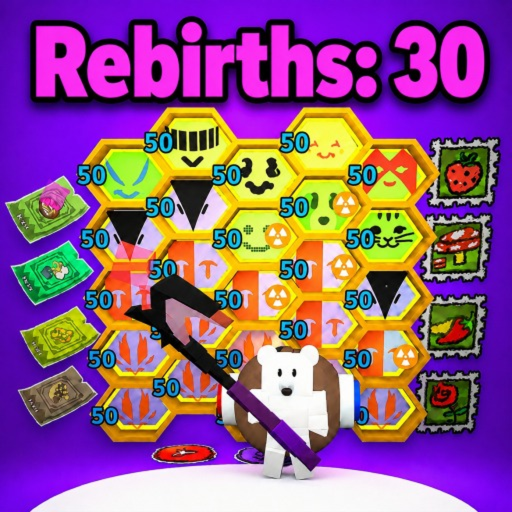
Documented mechanics

What the game itself tells you to exploit

From the official description and creator announcement, captured 2026-08-22 while the game was live.

MechanicWhat the source saysHow it changes farming
Auto magic beansUpdate text: magic beans automatic every five seconds.Idle-time planting is handled for you; plan around it rather than micromanaging bean placement.
Glitch DrivesUpdate text: glitch-drive capacity of 10.A capped storage item — keep the stack topped up instead of hoarding beyond the documented cap.
Retro Swarm ChallengeCreator announcement: timer-skip changes, plus bee-attack and energy adjustments.A challenge mode whose timers became more skippable — a viable alternative lane when field grinding stalls.
Rebirth balancingUpdate text: rebirth balancing.Reset economics shifted at least once; re-measure your pace after game updates instead of trusting an old average.
Field-boost codes1KAnd500 (developer-announced): Honeyday buff plus field boosts. 700Members (reported): Pepper Patch, Stump Field, Coconut Field boosts.Timed multipliers on specific fields — schedule sessions into them and verify status first, since redemption cannot be re-verified while the documented place is offline.

The same update text also lists settings changes and bee movement/ability fixes — less planning-relevant, but worth knowing when a run behaves differently after a patch. See the update tracker for the full text and dates.

Repeatable loop

Run the session in order

  1. 1

    Check codes and boosts first

    Open the codes page and confirm whether a boost window is live. A claimed Honeyday-style buff changes where you farm and for how long; skipping this step is the single most common wasted session.

  2. 2

    Set one target and its stop rule

    Decide before you start: reset-prep to your next rebirth threshold, a checkpoint push to the next five-level mark, or a boost-window sprint. One session, one outcome.

  3. 3

    Farm in timed blocks

    Run 30-minute blocks and note honey deltas between them. Blocks tell you whether the session is on pace for the target or whether the loop has gone stale — and they give you the honey-per-hour figure your rebirth pace needs.

  4. 4

    End at the decision

    If the target is met, spend down and rebirth — the reset is the point. If it is not, stop anyway when your blocks stop improving, and reschedule rather than grinding a dead loop.

  5. 5

    Log the result into the calculator

    Feed the fresh pace into the rebirth calculator to see how many sessions remain to the next milestone. Plans that update after every session stay honest.

Stop rules

Leave a bad farming loop

Three exits, in the order you should try them.

Pace collapsed

Two consecutive timed blocks well under your average mean the route is stale — changed balance, tired fields, or a bad server. Re-run the codes check, try a fresh server, or switch lanes (challenge mode instead of fields) before giving the session more time.

Target moved

After every game update the rebirth economics can shift — the documented update text includes rebirth balancing. If the honey you banked no longer matches the reset threshold, stop and re-measure instead of farming to an obsolete number.

Session overran

Past your planned end time, marginal honey per hour almost always drops. End on the decision: if the target is close, take the reset; if not, bank the measurement and let the calculator reschedule the next session.

FAQ

Farming questions

What should a farming session actually target?

In this game honey is the currency a rebirth resets, so a session should end in a decision, not a balance: farm toward the honey your next rebirth needs, rebirth, and start the next cycle. Anchoring the session to the next milestone — the next five-rebirth quest checkpoint, or the Triple SSA Passive at rebirth 10 / Upgrade Tree at rebirth 13 — keeps the grind from drifting.

Do codes change the best farming route?

They change its speed, so check them first. The developer-announced 1KAnd500 code reported a Honeyday buff plus other field boosts, and the community-reported 700Members mentioned Pepper Patch, Stump Field, and Coconut Field boosts. A code that doubles field output for a window effectively multiplies honey per hour for that session — verify each code's status on the codes page before planning around it, and remember codes are bound to this specific place.

How do I measure my honey per hour?

Note your honey value and the clock at the start of a run, play a fixed block (say 30 minutes), and read the delta. Two or three timed blocks give a stable honey-per-hour figure. That number is the honest input for the rebirth calculator's pace field — no official or community source publishes a universal rate, because it depends on your hive, fields, and boosts.

When should I stop a farm loop?

When the loop stops improving the next cycle: your honey-per-hour measurement collapses (tired fields, bad server), you hit the session's target honey, or you cross a milestone that changes what you should farm next. Switching activities every few minutes is the most common way players lose an evening for nothing.

Sources: official description and creator announcement (captured 2026-08-22); code statuses as shown on the codes page, last rechecked 2026-08-22–2026-09-08; availability re-verified 2026-10-09.

Rebirth calculator

Convert your measured pace into sessions remaining.

Codes status

Check boost windows before you commit a session.

Items and rewards

What the documented codes and unlocks actually grant.

Browse all guides